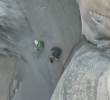
I was hiking years ago with a friend in Colorado National Monument's No Thoroughfare Canyon. It was springtime, and there was a bit of meltwater running down the usually dry creek bed. In most places, the sandy bottom was firm, but there was quicksand in other spots. He stepped in a little patch of quicksand and sunk up to about mid-calf. When he pulled free, it sucked off his boot. He retrieved the boot, full of wet sand, and I was able to snap a picture of it hurtling through the air as he angrily tossed it across the wash.
Quicksand is strange stuff. The hydraulics which produce it can change very rapidly. Wet sand can be firm one minute, as it is along the strand on an ocean beach, and like pudding the next.












 Are you liable if someone else uses your media for commercial purposes without your permission?
 Are Sky Swaps Still Legal? New 2026 law for Real Estate Photos